
Keep Animals out of your trash cans: Getting rid of litter scattered about your yard can be aggravating; finding ways to keep wildlife out of trash, however, might be even more annoying. Rats, raccoons, squirrels, and even insects could consider your trash cans as their own private dining experience. Food waste accounts for approximately 28 percent of total municipal solid waste; therefore, there is ample opportunity for wildlife to view your waste receptacles as potential food sources.
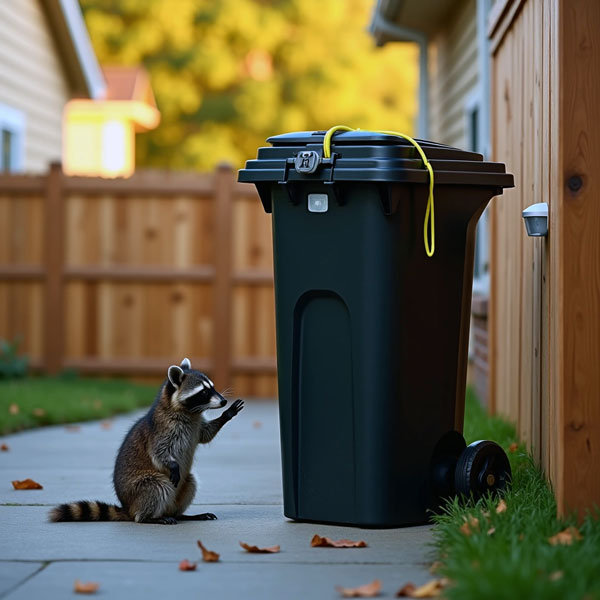
Fortunately, preventing animals from accessing your trash is quite straightforward. In this article, we will address ways to make your trash cans rat-proof, squirrel-resistant, ant-proof (roach-proof), and utilize rodent-proof, squirrel-proof, and ant (roach)- proof trash cans,, as well as natural and chemical deterrents that may help protect your waste receptacle(s).
Why Wild Animals Are Interested In Your Waste Receptacles
Odor drives every aspect of animal behavior. At the same time, you would like to know how to prevent animals from going after your trash. Since animals depend primarily on their sense of smell to locate food, your waste receptacle contains discarded food and decaying waste, creating an easily accessible source of food for wildlife seeking an immediate meal. Bears can identify the scent of garbage from miles away. Small wild animals such as raccoons and squirrels can also recognize odors coming from large distances.
Wildlife are opportunistic feeders. In any situation, they will seek out the easiest food source possible. If you leave a trash bin inadequately protected, you are essentially inviting them to search through your trash. Raccoons display exceptional dexterity with their hands and feet, which allows them to pry off lids, tip over containers, and remove complex securing devices. Squirrels utilize their agility to climb and jump to reach containers. Squirrels have very sharp teeth and can gnaw holes in plastic lids covering trash receptacles. Other birds,, such as crows and seagulls, can take advantage of bins from both above and below and will “peck” at any weak point to create an opening.
Problems created by regular access to human food waste include them beginning to rely on your trash for food and not searching for natural food sources. If animals discover that your trash cans consistently provide them with food, they will visit your property regularly.
Ways To Keep Animals From Going After Your Trash Using Secure Containers
Your choice of trash can will greatly determine the steps you need to take to learn how to prevent animals from getting into your trash. Animal-proof trash cans feature enhanced construction and locking mechanisms designed to prevent wildlife from accessing your trash. Some trash cans include a defense system that secures the lid to the can itself. It’s difficult for animals to gain entry into these types of trash cans. Traditional garbage cans can be secured with strong plastic bungees that wrap around the handle and tie together with the bungee latching mechanism. High-density polyethylene used in construction provides added thickness and discourages animals from chewing through the material.
Trash cans specifically engineered to withstand bear attacks were tested at facilities such as the Grizzly & Wolf Discovery Center and meet the Living with Wildlife Foundation guidelines. Although these specialty trash cans range in price from $300 to $500, lower-cost versions are available depending on where you live relative to bear populations.
Galvanized metal garbage cans provide a higher level of protection against rodents compared to plastic or cardboard. Rodents (mice/rats) cannot chew through galvanized steel. Metal garbage cans with screw-top lids provide airtight gaskets that seal completely, eliminating opportunities for critters to enter.
Update solutions provide lower-cost alternatives to replacing your existing containers. Bungee cords and straps allow you to convert your existing containers into animal-resistant containers. There are certified black-bear-proof trash locks available that have four-point secure latching systems using stainless steel nuts/bolts that keep rats and raccoons out of your trash while providing a single-handed means for humans to operate.
Natural And Chemical Deterrents That Work

Repellents provide yet another form of protection as you learn how to keep wildlife out of your trash. Chemical deterrents generally either overwhelm food odors or mimic the presence of predators. One highly effective solution for deterring wildlife is ammonia. First, clean your container with soap and water, then apply a light coating of ammonia to the surface. For some animals, ammonia has been known to mimic the scent of predator urine, thereby causing them to fear. Many species, including raccoons and rodents, are deterred by the presence of ammonia. Simply soak rags/cotton balls in ammonia, or pour small amounts directly onto trash bags. Please note that the ammonia smell dissipates rapidly and will require frequent reapplications.
Alternative deterrents include bleach and vinegar, both of which effectively mask the food scents that attract wildlife. Apply each time you put new bags into your containers. Mothballs have long been recognized for their ability to repel raccoons due to their extremely pungent smell. However, mothballs do contain chemicals that may pose health hazards should children/pets ingest them.
Natural deterrents offer safe alternatives when seeking a rodent-proof or ant-proof trash can strategy. Essential oils such as peppermint and citronella have proven successful in deterring many different species of wildlife. Thyme oil is particularly effective at repelling houseflies and killing fruit flies.
Non-chemical motion-activated lighting offers a safe alternative method of repellency. By placing a motion-sensitive light near your trash receptacle(s), you create an environment where unexpected movement at night will cause the light to suddenly appear, frightening nocturnal wildlife and sending them fleeing.
Concluding Comments
Preventing wildlife from accessing your trash does not have to be difficult. The best combination involves using secure trash cans coupled with strategically placed deterrents. Use rodent-proof trash can models featuring tightly sealed lids or update your current model(s) by installing a suitable locking mechanism. Consider adding natural or chemical repellents for additional protection against persistent wildlife. By implementing these strategies, you will minimize cleanup from scattered trash and reduce problems with wildlife in your yard.
Keep Animals out of your trash cans | Blog Article | Palmetto Can Cleaning | All Rights Reserved | June 2026 | Simpsonville & Greenville SC
Article by: Larry O Miller at SEO After Coffee.